Signal Quality Measurement - System description WO
Signal quality can be measured at different times using different methods:
- Before the project with BAMO
- During installation with SmartIntego Manager
- Ongoing measurement during operation and display in the integrator system
The signal quality depends on various influences, for example:
- Other electronic devices that are poorly shielded or communicate by radio
- Environmental obstacles (metal fire doors, new walls with residual moisture...)
- Distance between Gateway and LockNode
Measurement before the project (BAMO)
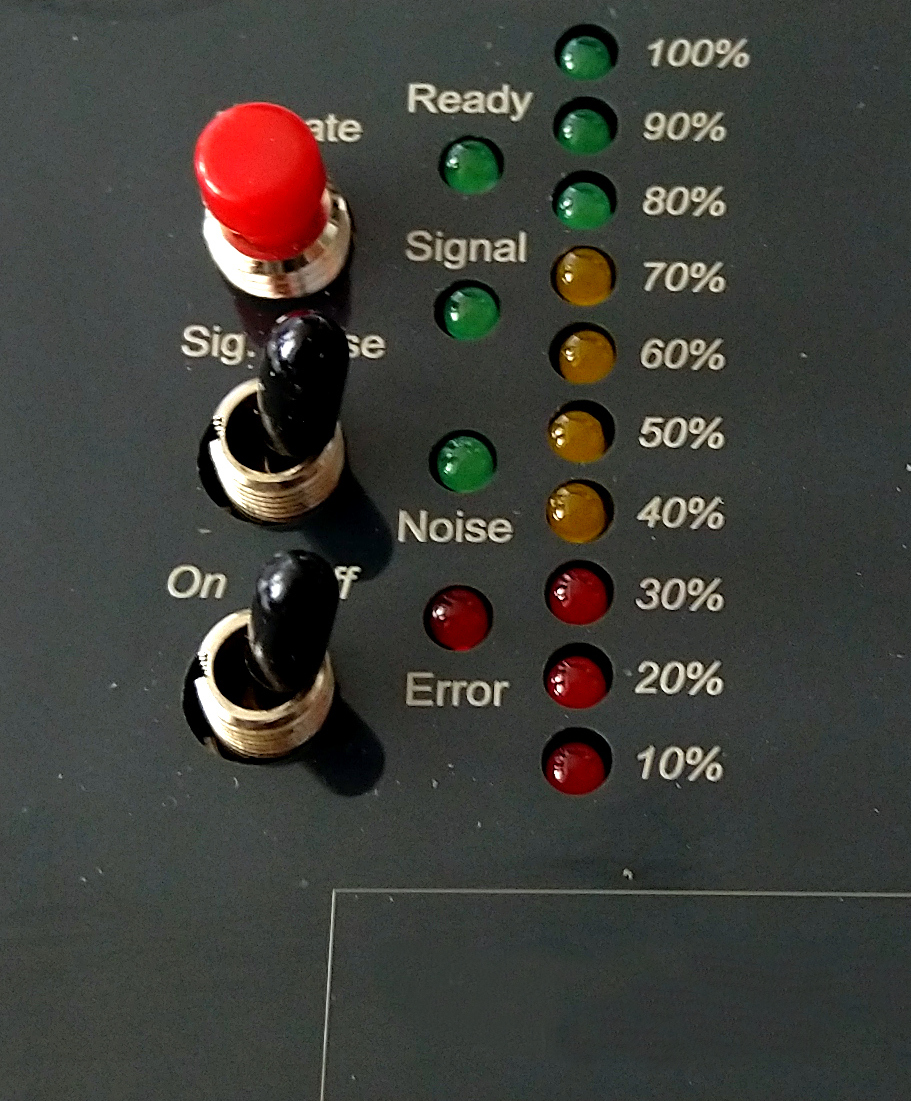
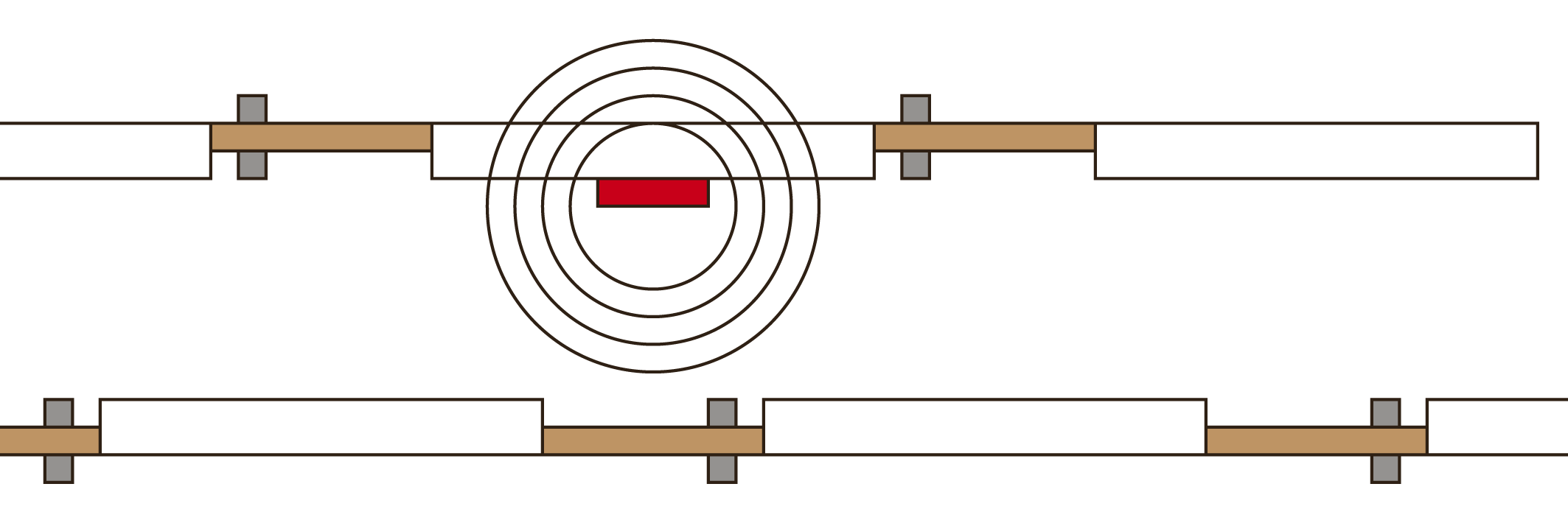
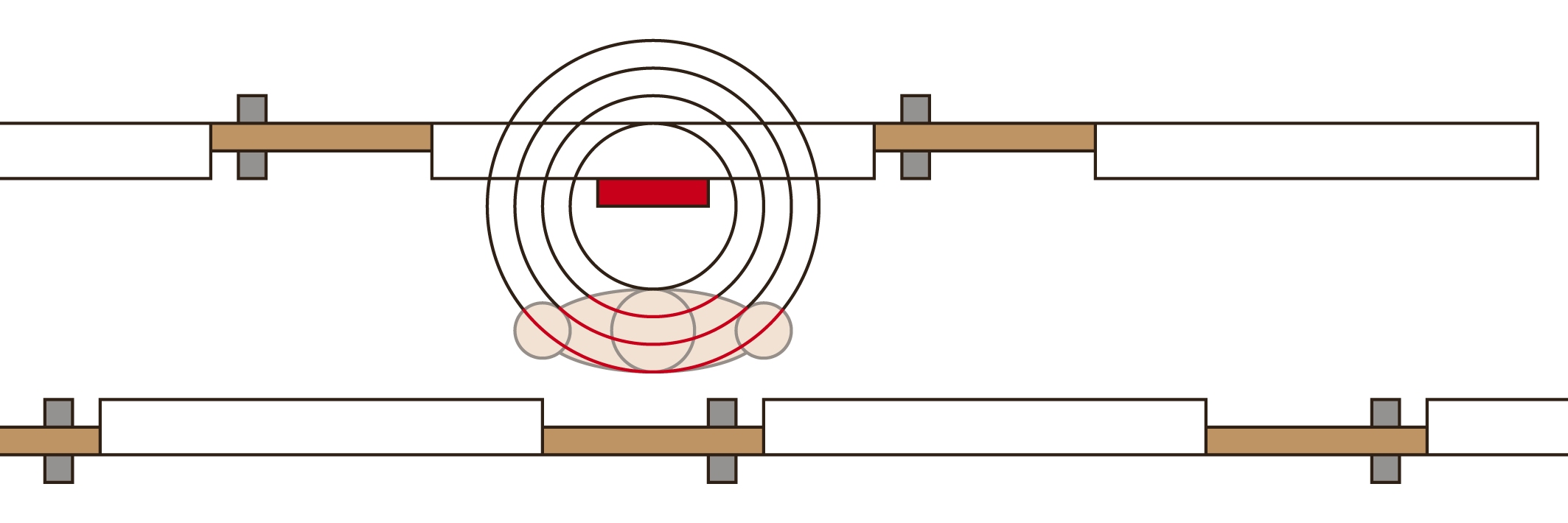
The SimonsVoss WaveNet test tool (BAMO.EU) can be used to take stock of the situation during measurement. The object in which the project is to be implemented should no longer be changed after the measurement. Therefore, measurement in an unfinished building or in a bodyshell is not recommended. The BAMO provides three values with two measurements:
1. Measurement |
|
2. Measurement |
|
Measurement during installation (SmartIntego Manager)
During installation, SmartIntego Manager displays the RSSI (Received Signal Strength Indication) values measured between GatewayNode and LockNode.
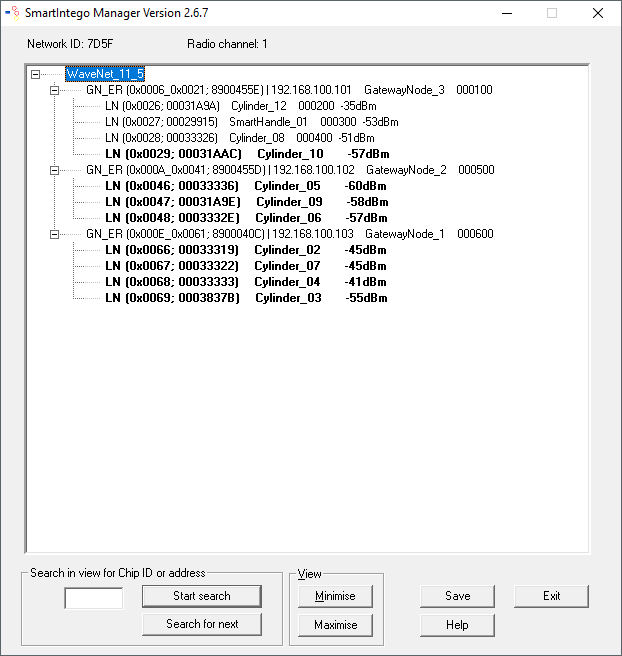
This value in dBm (decibels milliwatts) is:
- Current: An assessment of the status during installation (last packet of communication between SmartIntego Manager and LockNode).
- Logarithmic: In practice, an improvement of 10 dBm means twice the signal strength.
- Negative: The theoretical best value is 0 dBm and is only achieved by cable connections. The closer the value is to 0 dBm, the better reception.
The value displayed in SmartIntego Manager should not be less than -75 dBm for safe operation. Ambient conditions and thus the measured values change during normal operation. The displayed values are therefore only valid together with defined ambient conditions. These environmental conditions must be included and documented:
- Location of GatewayNodes
- Position of locking devices (doors open or closed)
- Interference influences (no moving obstacles between the locking device and the GatewayNode)
Measurement during normal operation (QoS value in the integrator system)
After each communication between the GatewayNode and LockNode in which a packet has been sent and received, the signal quality is calculated as a QoS value (Quality of Service) and sent to the integrator system. This quality index is an average of:
- Packets Received Successfully
- Packets sent successfully
- Number of all packets
- Packets lost or defective
- ACKs not received (internal responses in WaveNet)
- Number of channels used (communication blocked by other communication)
The integrator system can display the received QoS value. Due to the composition and averaging, the QoS value is a long-term calculated value. It is not suitable for detecting short-term signal quality deflections. Short-term faults can be detected with a WaveNet test card (see step-by-step instructions) or SmartIntego Manager.
Improvements in signal quality can only be seen in the QoS values after some time.
A PowerOn reset on the locking device also deletes the QoS value.
WaveNet quality guidelines for operation with SmartIntego
The quality of WaveNet is viewed more critically for SmartIntego compared to other SimonsVoss products. WaveNet is the backbone of a SmartIntego wireless online system and opening doors largely depends on WaveNet and its infrastructure.
The recommended limits contain a buffer. Reason: The GatewayNode is often positioned in such a way that it reaches as many locking devices as possible without any obstacles:
- GatewayNode in progress
- Locking devices with LockNodes on the outside of the doors
Persons who open the doors normally stand directly in front of the doors and thus shield the LockNode with their body. This significantly impairs the signal quality. The degradation of the signal quality by opening the door is taken into account in the recommended limit value of -75 dBm.